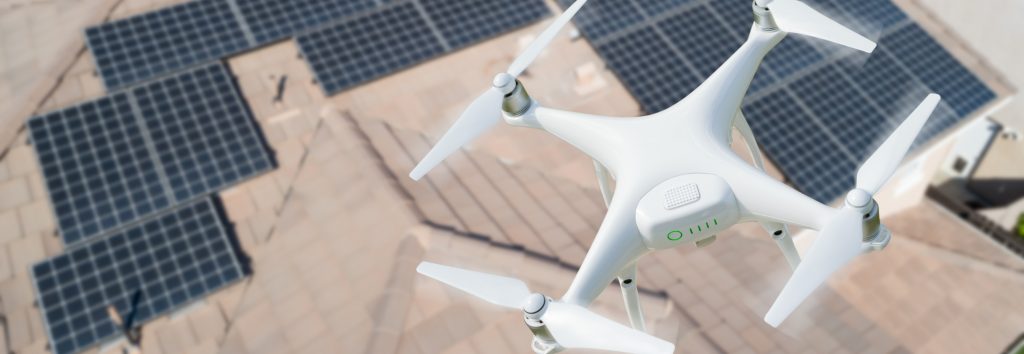
Have you ever wondered how the world looks from above?
For anyone working in construction, mining, agriculture, environmental management or cinematography in Australia, that view from the sky is no longer just impressive — it’s a practical tool. Modern aerial surveying with drones gives you fast, accurate data without putting people in harm’s way.
From project managers who need reliable site measurements to aspiring commercial pilots working towards a CASA-accredited Remote Pilot Licence (RePL), drone-based aerial surveying and inspections now sit at the centre of many workflows.
“You can’t manage what you don’t measure.” This well-known line is especially true for aerial work — drones simply make measurement much easier from the air.
1. Increased Efficiency And Accuracy

Aerial surveys and inspections support construction, agriculture, infrastructure management, environmental monitoring and more. Traditional methods — manned aircraft, cherry pickers, cranes and scaffolding — are slow to organise, expensive to run and sometimes risky.
Drone-based aerial surveying changes that equation by giving you more data in less time.
| Method | Setup Time | Typical Cost | Safety Risk |
|---|---|---|---|
| Ground Crews (Scaffolds) | High | High (labour, gear) | Working at height, manual |
| Helicopter / Fixed-Wing | High (charter) | Very High | Aircrew + passengers at risk |
| Drones | Low (on-site) | Moderate / Low | Pilot on ground, remote view |
Modern drones with high‑resolution cameras and advanced sensors — as explored in a comparative study of aerial survey techniques — can deliver measurable advantages over traditional methods:
- Cover large areas in a single flight
- Capture consistent, repeatable datasets
- Reach rooftops, towers, bridges, powerlines and pipelines without putting personnel at height
From those flights you can generate:
- Accurate measurements of distance, area and height
- High‑resolution orthomosaic maps of entire sites
- Detailed 3D models and point clouds
- Thermal imaging to identify heat leaks, moisture ingress or electrical faults
When surveys need even more detail, drones can carry specialised sensors such as LiDAR and multispectral cameras. These help measure:
- Elevation and terrain in dense vegetation
- Vegetation health and crop stress
- Soil conditions and moisture patterns
Because drones can be deployed quickly and repeat the same flight path over and over, you get consistent aerial surveying data for progress tracking and quality checks. That means:
- Fewer site visits
- Less rework
- More confidence in every measurement you make
2. Improved Safety In Hazardous Environments

Mines, oil and gas facilities, power infrastructure and remote roads all need regular inspections. Traditionally, that has meant sending people into situations that are high‑risk:
- Working at height on scaffolding or elevated work platforms
- Entering confined spaces, underground tunnels or tanks
- Operating near live plant, traffic or unstable ground
Drones change the way these inspections are carried out.
Instead of putting workers in harm’s way, a trained pilot can stand in a safe location and send a drone to:
- Inspect flare stacks, chimneys, cranes and conveyors
- Check high walls, tailings dams and pit faces
- Examine bridges, culverts and road embankments
- Look for leaks or corrosion in pipelines and tanks
Equipped with high‑resolution video, stills and thermal sensors, the drone collects precise data that engineers, asset managers and safety teams can review from the office. Any area of concern can then be targeted for a focused follow‑up, reducing the time people spend in hazardous zones.
For operators in the Northern Territory, where sites are often remote and conditions harsh, reducing exposure to heat, dust, wildlife and long travel times is just as important as reducing traditional “work at height” risks. Drone-based aerial inspections support both safety and productivity.
As many safety managers put it, “If you can put a lens there instead of a person, you should.”
3. Time-Saving And Real-Time Decision Making

Traditional aerial surveys using helicopters or fixed‑wing aircraft require charter bookings, long mobilisation times and airspace coordination. Ground-based inspections can be just as slow, especially on rugged or remote sites.
Drones allow teams to complete aerial surveying and inspections in a fraction of the time.
In sectors like agriculture, construction and mining, this speed means:
- More frequent surveys and inspections
- Faster progress reporting and decision‑making
- Less disruption to on‑site operations
High‑resolution imagery and video captured during a flight can be processed into maps and models, but it can also be reviewed immediately to identify obvious issues. For example:
- In agriculture, a drone survey can reveal crop stress, irrigation problems or pest damage before they affect an entire paddock.
- On a construction site, a quick flight before concrete pour or backfill can confirm that works match design levels and set‑out.
Drones also support live operations. With the ability to livestream footage back to a ground station or control room, decision‑makers can watch inspections in real time and direct the pilot to areas of concern.
During emergencies, such as flooding, bushfires or cyclone damage, this real-time aerial surveying information helps incident controllers:
- Understand access issues and hazards
- Prioritise resources and personnel
- Monitor changing conditions safely from a distance
The result is faster, well‑informed decisions — without waiting days for survey results.
4. Lower Environmental Impact

Traditional surveying and inspection methods often rely on heavy vehicles, machinery and repeated ground access. That can:
- Compact soil and damage plant roots
- Disturb or remove vegetation, increasing erosion
- Create wheel tracks and access lines through sensitive areas
- Generate more fuel use and emissions
Noise from helicopters, machinery and constant vehicle movements can also impact wildlife, especially in conservation areas and along waterways.
Drones can significantly reduce this footprint. Because they fly above the area of interest:
- There is much less need for heavy vehicles to drive across site
- Soil compaction and vegetation disturbance are minimised
- Sensitive areas can be monitored without repeated physical access
Many survey‑grade drones are quiet enough to operate near residential areas, conservation zones and livestock without major disturbance. When fitted with thermal or zoom cameras, they can conduct aerial surveying and inspections without touching infrastructure or habitat at all.
For organisations working in national parks, Indigenous Protected Areas and remote NT regions, the ability to gather accurate data while respecting environmental and cultural values is a major advantage — a benefit well documented in aerial detection surveys in sensitive ecosystems.
5. Greater Flexibility Across Industries
One of the strongest advantages of drones in aerial surveying is how flexible they are across different industries and tasks, a trend reflected in the growing Aerial Survey Services Market projected through 2032.
A single aircraft platform, flown by a properly trained pilot, can switch between roles simply by changing sensors, flight plans or software:
- Real Estate And Marketing – Aerial property overviews, site context and cinematic fly‑throughs.
- Construction – Progress surveys, cut‑fill calculations, as‑built records, crane and facade inspections.
- Mining And Quarrying – Stockpile volumes, haul road condition checks, pit wall mapping, rehabilitation monitoring.
- Agriculture – Crop health surveys, irrigation performance analysis, fence line and infrastructure inspections.
- Environmental And Government Work – Coastal erosion studies, flood mapping, weed and feral animal monitoring, cultural site recording (in consultation with Traditional Owners).
Drones can fly low for detailed inspections or higher for broad aerial surveying coverage. They can repeat the same flight every week or month, giving you a consistent timeline of your site in 2D and 3D.
All of this flexibility comes with lower mobilisation costs than traditional methods and allows organisations to bring more work in‑house once staff hold the right licences and training.
What Is Aerial Surveying?
Before looking deeper at workflows and training, it helps to be clear on what aerial surveying actually is.
At its core, aerial surveying is the collection of accurate, geo‑referenced data from an airborne platform — typically a drone. That data is then processed into maps, measurements and models that decision‑makers can use.
It is useful to distinguish:
- Aerial Surveying – The overall process of planning flights, capturing images or sensor data and geo‑referencing it.
- Aerial Mapping – The creation of specific map products from that data, such as orthomosaic images or contour plans.
Drones have largely replaced manned aircraft for many aerial surveying jobs because they:
- Fly lower and slower, capturing more detail
- Are cheaper to operate
- Can be deployed quickly on demand
- Offer better safety outcomes for crews
Compared with satellite imagery, drone-based aerial surveying offers far higher resolution, consistent timing (you choose when to fly) and much more control over where and how data is collected.
A common saying in surveying is, “The map is only as good as the data behind it.” Drones give you the chance to gather that data whenever conditions suit.
How Drone Aerial Surveying Works
A successful drone aerial surveying project follows a structured workflow. Understanding this process is essential for aspiring RePL holders and organisations that want reliable results.
1. Project Planning
Every job starts with clear objectives:
- What needs to be measured or inspected?
- What accuracy is required?
- How often will flights be repeated?
At this stage, you also:
- Define the survey area and ground control needs
- Check airspace restrictions and NOTAMs
- Plan for site access, security and communications
- Confirm compliance with CASA regulations and any client‑specific safety requirements
2. Equipment Selection And Pre-Flight Checks
Next, you match tools to the task:
- Multi‑rotor drones for detailed inspections and smaller areas
- Fixed‑wing or VTOL drones for larger aerial surveying projects
- RGB cameras, LiDAR, multispectral or thermal sensors depending on the data required
Before each flight, pilots carry out:
- Visual inspections of aircraft and batteries
- Firmware, compass and IMU checks
- Sensor calibrations and storage checks
- Site risk assessments and safety briefings
3. Flight Planning And Data Capture
Using mission‑planning software, the pilot designs flight lines with:
- Appropriate altitude for the required ground sample distance
- Front and side overlap (often 70–80%) to support accurate photogrammetry
- Speed and camera trigger settings for sharp, consistent images
During the flight:
- The drone follows the planned route autonomously
- The pilot monitors telemetry, weather and airspace
- Any manned aircraft or unexpected obstacles are managed in line with CASA rules
For inspection work, the pilot may switch to manual or semi‑manual modes to position the drone near assets such as towers or bridges.
4. Processing And Deliverables
After landing, the data card does not just go in a drawer. For aerial surveying to add value, the information must be processed properly:
- Images are imported into photogrammetry or LiDAR software
- Ground control points are used to geo‑reference and tighten accuracy
- Orthomosaic maps, 3D models and reports are generated
- Results are checked against known points or previous surveys
The final outputs can then be shared with clients and project teams through PDFs, CAD files, online viewers or GIS platforms.
Typical Outputs From Drone Aerial Surveying
Drone-based aerial surveying can produce a wide range of outputs. Understanding what is possible helps you design projects around the information you really need.
Orthomosaic Maps
An orthomosaic is a high‑resolution, distortion‑corrected image of your site. Because it has uniform scale, you can measure distances and areas directly.
Common uses include:
- Construction and subdivision planning
- Environmental monitoring and rehabilitation mapping
- Road, rail and utility corridor documentation
3D Models, Point Clouds And Elevation Data
From aerial surveying imagery or LiDAR data, you can generate:
- Digital Elevation Models (DEMs) – For drainage, flood modelling and earthworks design.
- Digital Surface Models (DSMs) – Showing all objects on the ground, such as buildings and vegetation.
- Point Clouds And Textured 3D Models – For detailed engineering, clash detection, crane studies and visual presentations.
These 3D products support more informed planning and can significantly reduce survey revisit costs.
Volumetrics And Change Detection
In mining, quarrying, construction and waste management, accurate volumes are essential. Drone surveys can provide:
- Stockpile volumes for inventory and reconciliation
- Cut‑fill calculations for bulk earthworks
- Void and cell capacities for landfills and tailings facilities
By flying the same area regularly, you can also run change detection analysis:
- Tracking construction progress against program
- Monitoring erosion or deposition along coasts and rivers
- Measuring rehabilitation success over time
Agricultural And Environmental Reporting
With multispectral sensors, aerial surveying supports precision agriculture and environmental science by providing:
- Crop health indices and yield estimates
- Irrigation performance and waterlogging maps
- Vegetation cover and weed infestation mapping
These outputs help farmers, agronomists and environmental managers make targeted, data‑driven decisions.
Training, Compliance And Career Pathways In Aerial Surveying
For aspiring commercial pilots and organisations in the NT and across Australia, aerial surveying is one of the strongest growth areas in the drone sector.
Why Training And RePL Matter

Operating a drone for aerial surveying and inspections is very different from flying recreationally. Commercial work typically requires:
- A CASA‑issued Remote Pilot Licence (RePL)
- Operation under a Remote Operator’s Certificate (ReOC), or within relevant excluded‑category rules
- A solid understanding of airspace, risk management and safe operating procedures
Formal training with a CASA‑accredited provider such as Unique Aerial Solutions (UASNT) helps you:
- Gain hands‑on flying skills in realistic survey scenarios
- Learn mission planning, data capture and emergency procedures
- Understand how to apply CASA regulations to real jobs
- Build a logbook and portfolio that appeals to employers in mining, construction, agriculture and government
Organisational Benefits
For organisations and government agencies, investing in aerial surveying training and competency checks for staff delivers:
- Consistent, high‑quality data across projects
- Reduced dependence on external contractors for routine surveys
- Better safety outcomes and compliance records
- The ability to respond quickly to issues without waiting for external crews
In remote NT communities and regional centres, having trained staff on the ground who can carry out aerial surveying and inspections when needed is particularly valuable.
Bringing It All Together
Drones have reshaped how aerial surveying and inspections are carried out in Australia. They:
- Deliver fast, accurate data over large or hard‑to‑reach areas
- Keep people away from hazardous tasks and locations
- Reduce environmental disturbance and mobilisation costs
- Provide flexible tools that adapt to mining, agriculture, construction, environmental work and film production
Whether you are an aspiring commercial pilot aiming for your RePL, a project manager responsible for delivery, or an organisation looking to strengthen safety and compliance, drone-based aerial surveying offers a practical way to see more, know more and make better decisions from a bird’s eye view.